






Wellbeing Nutrition
Wellbeing Nutrition SLOW Triple Strength Omega-3 Fish Oil Softgels
60 softgels₹999.00
1,324 mg omega-3 per serving (2 softgels)
≈ ₹33 per serving
Limited stock
Omega-3s are a family of fats. Your body needs them. It cannot make ALA, the plant omega-3, so ALA must come from food.
They are polyunsaturated fats. Fish, nuts, seeds and some oils contain them. Most research is about 3 omega-3s:
Your body changes only a small part of ALA into EPA and DHA. The NIH reports less than 15%. To get more EPA and DHA, eat foods or supplements that contain them.
Omega-3s are part of every cell in your body, and your body cannot make enough of them. So your food must supply them.
Brain and eyes
The brain and the eyes contain large amounts of DHA, one of the omega-3s from fish and algae.
Fish and your heart
The US National Institutes of Health (NIH) says fish in a balanced diet helps keep the heart healthy, especially in place of less healthy food. It also gives vitamin D and iodine.
Blood fats
In trials, omega-3 lowered triglycerides, a fat in your blood. Prescription omega-3 at 4 g (4,000 mg) a day lowers high levels, far more than a shop capsule holds. If yours are high, your doctor decides the treatment.
Pregnancy
In trials, fewer babies were born early (before 37 weeks) when their mothers took omega-3. Slightly more pregnancies probably went past 42 weeks. If you are pregnant, ask your doctor.
For heart and blood vessel problems, memory, eyes and mood, trials of supplements found little or no effect. At high doses, they were linked to an irregular heartbeat in people at high heart risk. An omega-3 supplement is not a treatment for any condition. If you have a health condition, ask your doctor.
Only if your food leaves a gap.
India's National Institute of Nutrition (ICMR-NIN) says fish and a balanced diet can meet its daily amounts. It also says city diets need more omega-3. Studies it reviewed found low levels in many better-off city dwellers.
Ask your doctor first if you take any medicine regularly, have a fish or shellfish allergy, or are buying for a child.
Side effects are usually mild. They include an unpleasant taste, bad breath, heartburn, nausea, stomach upset, diarrhoea, headache and smelly sweat.
Start with food. A supplement adds to a varied diet; it does not replace one.
Pick the kind that fits your diet, then compare packs by the mg of EPA plus DHA in one serving.
| If you want | Look for | Why |
|---|---|---|
| No fish, or a vegetarian source | Algal oil in a shell without gelatin | It gives DHA without fish. |
| EPA as well as DHA | Fish oil, or an algal oil that lists EPA | Some algal oils give DHA only. |
| The lowest cost for the omega-3 | The cost of 100 mg of EPA plus DHA | Pack price ÷ total mg of EPA plus DHA in the pack × 100. |
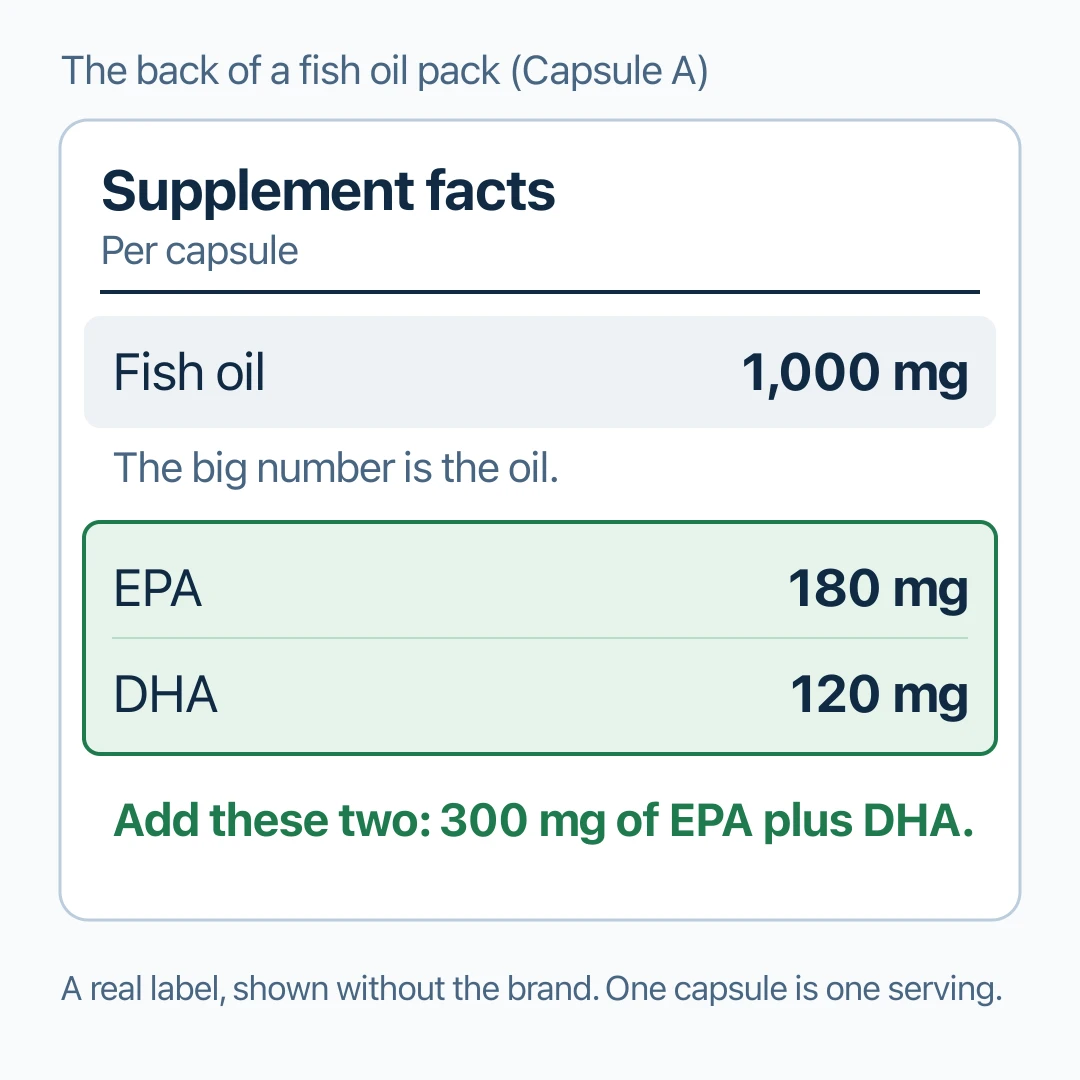
The bigger number can mean less omega-3. Take two real labels. Capsule A says 1,000 mg of oil, and Capsule B says 834 mg. Yet B gives more EPA plus DHA: 375 mg against 300 mg.
KiloCare Pharmacy
We stock two: a fish oil, and a DHA supplement made from algae for people who do not eat fish.
Our choice to stock them is not a personal medical recommendation. If you choose another pack, the checks above still apply.
Wellbeing Nutrition
₹999.00
1,324 mg omega-3 per serving (2 softgels)
≈ ₹33 per serving
Limited stock
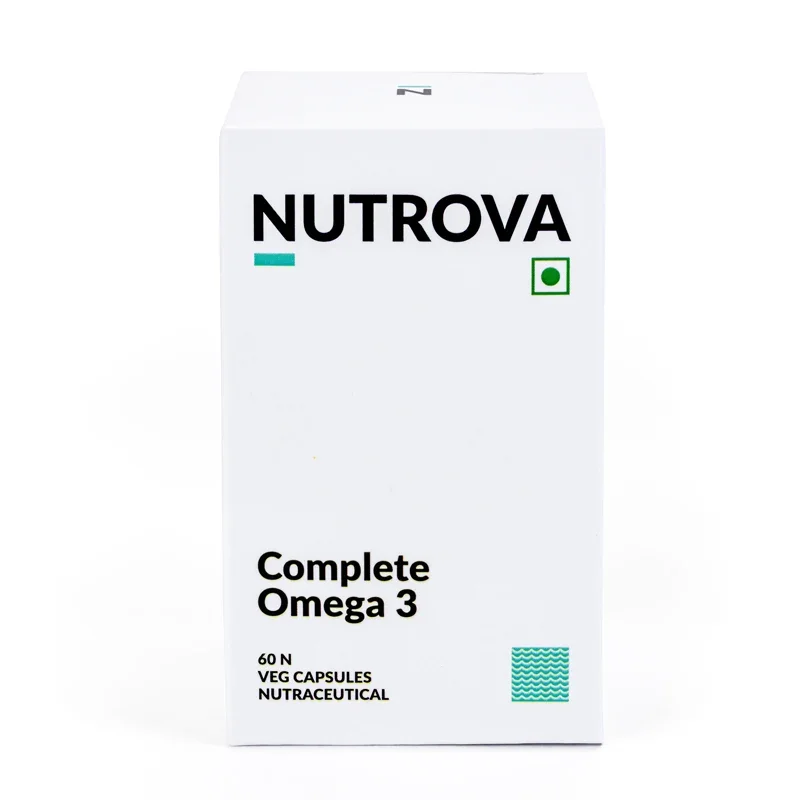
Nutrova
₹1,070.00
≈ 75 mg DHA per serving (1 capsule)
≈ ₹18 per serving
Limited stock
Ask your doctor first if you take a blood thinner or any medicine regularly. Ask too if you are pregnant or breastfeeding, or are buying it for a child. If you have a fish or shellfish allergy, ask your doctor before you take fish or krill oil. If you take one, follow the directions on the pack.
Medical disclaimer: This guide is general information. Results may vary. An omega-3 supplement does not replace advice from your doctor.
The facts on this page come from these documents. Each link opens the original. The two example labels were read from pack photos, and our packs' figures from their labels and listings.
Used for: ALA, EPA and DHA, how little ALA the body converts, and where omega-3s are found in food and in the body. The kinds and amounts of supplement, side effects and blood thinners. What trials found for the heart, heart rhythm, pregnancy, memory, eyes and mood.
Used for: ALA foods in Indian diets, low levels in city diets, and vegetarians. Fish a week, the daily amounts ICMR-NIN lists, and algae as a vegetarian source.
Used for: the heart, triglyceride and irregular heartbeat findings. Cochrane is a group that reviews medical trials.
Used for: early births, and pregnancies that went past 42 weeks.
Used for: the eye disease and mood findings.
Used for: the memory and dry eye findings.
Used for: how heat, light and air make omega-3 oils go stale.
Used for: the label checks, and the line that supplements do not replace a varied diet.